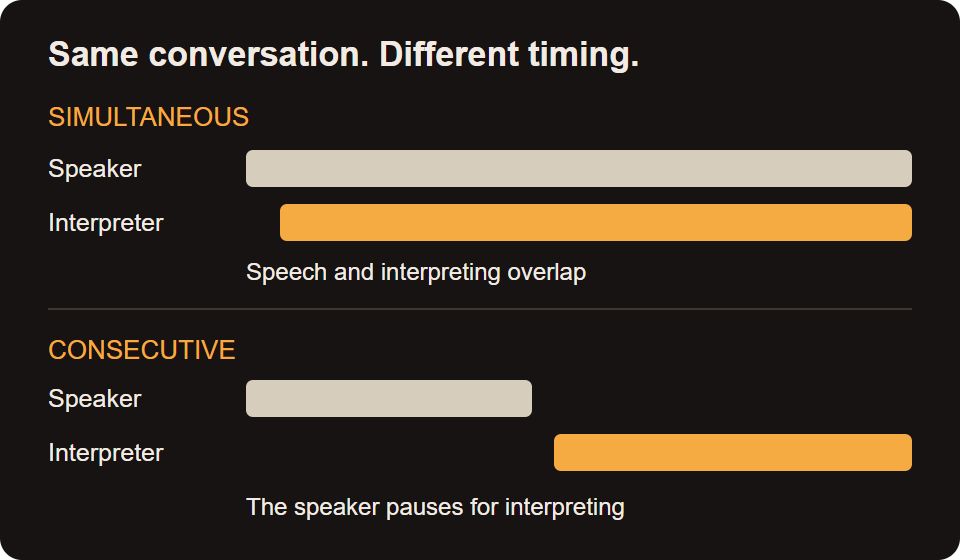
Simultaneous interpreting lets participants hear another language while a speaker continues talking. Consecutive interpreting uses alternating turns: the speaker pauses, then the interpreter delivers the message. For an event in Indonesia, choose according to the discussion format, language directions and time available. If you need simultaneous interpreting, confirm the interpreting team and equipment rental as separate parts of the quotation.
Which mode fits your event
The European Commission describes simultaneous interpreting as interpreting while the speaker is speaking, and consecutive interpreting as delivering the message after the speaker finishes a segment. These definitions explain the timing; choosing a mode also requires looking at how people will participate.
| Planning question | Simultaneous interpreting | Consecutive interpreting |
|---|---|---|
| How does the conversation flow? | The interpreter works alongside the speaker, with a short delay. | The speaker and interpreter take turns. |
| What should the agenda allow? | Time for setup, testing and interpreter breaks. | Time for each interpreted turn, as well as breaks. |
| When should you consider it? | Presentations or discussions where a continuous programme matters. | Meetings where participants can pause and work through points together. |
| What equipment should you discuss? | The interpreter's audio feed and working position, plus delivery of each language to listeners. | A microphone and room sound system where needed for everyone to hear. |
For a presentation-heavy conference, ask the provider to assess simultaneous interpreting. For a negotiation or focused business meeting, consecutive interpreting may fit the pace of the discussion. These are planning starting points: a small meeting can need simultaneous interpreting, and a large event can include consecutive segments.
When booking an Indonesian interpreter, specify both languages and the directions required. An English presentation interpreted into Indonesian is a different brief from a discussion in which participants ask questions in both languages. Include audience questions and breakout sessions in the brief.
What to check in an equipment rental quotation
A simultaneous interpreting system carries the interpreter's voice to participants. Hiring the equipment does not, by itself, establish who will interpret, operate it or resolve a fault. Ask for those responsibilities to be itemised alongside delivery, setup and dismantling.
The European Commission's conference-room specifications identify practical requirements including interpreters' sound and sightlines, microphones for audience questions, audio from videos and technical support. They are a useful reference for planning; they describe Commission requirements, rather than a legal rule for every event in Indonesia.
Check every source of speech and sound
List lectern, panel and audience microphones, video playback and any remote speakers. Ask the venue and interpreting supplier to agree how each source reaches the interpreters. Include these sources in the sound check, especially questions asked away from the stage.
Agree how listeners receive each language
Confirm how many people need to listen at the same time, which language channels they need, and whether sessions run in separate rooms. Ask how receivers and headsets are distributed, collected and replaced if faulty. Request a clear list of included quantities and spares.
Confirm the interpreting team's working conditions
Ask whether the proposed setup uses a booth or another arrangement appropriate to the event. Confirm the sound feed, view of speakers and presentations, working space and access. A portable arrangement should be assessed against the room, noise and format before it is accepted as a substitute.
Assign setup, support and contingency responsibilities
Name the person coordinating with the venue, agree access and testing times, and confirm whether a technician remains during the event. Ask what happens if a microphone, receiver or audio connection fails. Share the agenda with the interpreting provider so staffing and breaks can be planned for the actual workload.
Experience across both interpreting modes
Moch Hikmat Gumilar's interpreting record includes a disaster-relief management business delegation to Indonesia in April 2015 and a technical forum in Amman in May 2016. His CV records both simultaneous and consecutive interpreting for each assignment.
For an organiser planning a programme with both modes, the practical step is to specify the mode for each session. The quotation should identify rooms, session times, language directions, team arrangements and any equipment that must be moved or added. If discussions happen at the same time, brief each room separately so its requirements can be assessed.
What to send when requesting a quotation
Send a short event brief before comparing prices:
- Date, location and schedule: city, venue, room count, access times, session duration and breaks. Say whether the venue is confirmed.
- Languages and directions: what speakers will use, what listeners need, and which languages may be used for questions.
- Participation: expected attendance, simultaneous sessions, panel discussions and whether anyone joins remotely.
- Subject and preparation: agenda, speaker names, slides, scripts and terminology when available. Agree how to share confidential material before sending it.
- Venue facilities: available sound equipment, microphones, room layout and the venue's technical contact.
- Requested scope: interpreters, equipment, technical support, transport, setup and collection. Identify any recording or streaming requirement before agreeing the scope.
Ask the provider to state inclusions, exclusions, staffing arrangements, working hours and the process for changes. Compare quotations against the same brief. A price for equipment alone cannot be compared directly with a price that also includes interpreters and event support.
Questions organisers often ask
Does consecutive interpreting always take twice as long?
Plan extra time for interpreted turns, but do not apply a fixed multiplier to the entire event. Breaks, videos and activities may use time differently. Review each agenda segment with the interpreter and agree where speakers will pause.
Are interpreters included with simultaneous interpretation equipment rental?
Check the written quotation. It should state separately whether the interpreting team, technician, setup, support and equipment are included. The words “complete system” are not enough to establish the people or services supplied.
Can the same setup cover a hybrid event?
A hybrid event needs a specific audio and platform plan. Tell the supplier where speakers, interpreters and listeners will be located. Agree how remote participants receive their language and ask questions, then test that arrangement before confirming it is suitable.
Is an Indonesian sworn translator the same as an event interpreter?
For a spoken event, ask about interpreting experience relevant to the subject and format. Sworn document translation is a separate scope to discuss when written documents require it. If both are needed, include the event brief and the receiving organisation's document requirements in separate parts of your enquiry. See our Indonesian sworn document translation service for the document workflow.
Discuss your interpreting brief
Contact Translation.co.id with your event date, city, language directions and draft agenda. Include any simultaneous interpreting system rental requirements so that availability, equipment scope and responsibilities can be confirmed in the quotation.